
Interviews are stressful, even when preparation feels complete.
Many students and job seekers know the answers but still struggle to explain them clearly.
Nervousness often takes over during interviews.
Unexpected questions add more pressure.
In most cases, the real issue is not knowledge but lack of proper practice.
This is where AI for interview preparation is changing the process in 2026.
Instead of reading random questions or memorising answers, AI tools help simulate real interview situations. They ask relevant questions, analyse responses, and highlight areas that need improvement.
Practice becomes more flexible with AI.
You can practise anytime, without feeling pressure.
Moreover, sessions can be repeated until answers start feeling natural.
As a result, weak areas become clearer through consistent feedback.
AI does not replace effort or learning.
Instead, it supports preparation by keeping practice structured and focused.
In this guide, we explore how AI for interview preparation works, the types of tools available, and how to use them effectively.
The goal is simple. Help you attend interviews feeling confident, prepared, and in control.
Why Interview Preparation Is Changing in 2026
Interview preparation today looks very different from a few years ago. Earlier, most candidates depended on books, online articles, or advice from friends. While these methods helped, they often felt generic and incomplete.
In 2026, interviews have become more skill-focused.
Employers now look for clear communication. Problem-solving ability matters more than memorised answers.
Another big change is the interview format itself. Many companies use online interviews, recorded responses, and multiple short rounds. This makes it harder to practise using traditional methods alone.
This is where AI fits naturally into the process.
AI tools adapt to your preparation style. They change questions based on your answers.
They help you practise real interview scenarios instead of theory.
Students and freshers benefit the most from AI interview preparation. In many cases, they may not have mentors or mock interviews available. As a result, AI offers a safe space to practise without judgement.
Even working professionals are now turning to AI. Career switches and role changes often require targeted practice. In such situations, AI makes preparation easier by focusing on specific roles and skills.
Overall, interview preparation is no longer about guessing questions. Instead, it is about practising smarter and improving consistently.
How AI Helps with Interview Preparation
Preparing for interviews is not only about knowing answers. It is also about how you respond, explain, and communicate under pressure. This is exactly where AI becomes useful.
AI tools start by understanding your goals. For example, some focus on HR interviews, while others support technical or role-specific rounds.
Questions are not random. Instead, AI selects them based on job roles, skills, and experience level. As a result, practice feels more relevant and realistic.
Mock interviews also feel more natural with AI. You answer questions just like in a real interview, while the system listens, analyses, and responds accordingly.
Feedback is one of the biggest advantages. AI highlights unclear answers and points out missing details. In some cases, tools even analyse tone and confidence.
Another key benefit is consistency. You can practise daily without depending on anyone else, and over time, progress becomes clearly visible.
Moreover, AI does not judge or rush you. It allows mistakes, and learning happens at your own pace. This makes interview preparation less stressful and more focused.
Types of AI Tools Used for Interview Preparation
Not all AI interview tools work the same way. Each type focuses on a different part of interview preparation. Understanding this helps you choose the right tool instead of feeling confused.
Some tools focus on interview questions. They generate HR, behavioural, and technical questions. Questions change based on your role and experience.
Mock interview tools simulate real interviews. You answer questions through text, voice, or video. These tools help you practise under real conditions.
Resume-based tools analyse your CV. They generate questions from your skills and projects. This prepares you for personalised interview rounds.
Communication-focused tools work on clarity. They help improve structure and tone. Some even suggest better ways to explain answers.
Feedback and analysis tools focus on improvement. They highlight weak responses. They track progress over multiple sessions.
Each tool serves a purpose. The right combination creates balanced preparation.
Quick Summary Table: Best AI Tools for Interview Preparation (2026)
Before choosing any AI tool, it helps to see a quick comparison. The table below highlights the best AI tools for interview preparation in 2026, along with what they are best for and whether they are free or paid. This makes it easier to pick a tool that matches your interview goals and budget.
| Tool Name | Best For | Interview Type Covered | Free / Paid | Ideal Users |
|---|---|---|---|---|
| Final Round AI | Realistic mock interviews | HR, behavioural, role-based | Paid with free trial (varies) | Students, freshers, job switchers |
| LockedIn AI | Advanced interview coaching | Behavioural, technical, case rounds | Paid (some limited free use) | Professionals, senior roles |
| InterviewBuddy | Live mock interview experience | HR and communication-focused | Paid | Students, freshers |
| Interview Sidekick | Answer structuring & clarity | Behavioural, situational | Paid (free trial available) | Anyone struggling with answers |
| Remasto | Technical interview practice | Coding, system design | Paid with free tier | Tech roles, developers |
Detailed Tool Reviews: Best AI Tools for Interview Preparation
Below is a closer look at the best AI tools for interview preparation in 2026. Each tool serves a different purpose, so understanding how they work will help you choose the right one for your interview needs.
Final Round AI
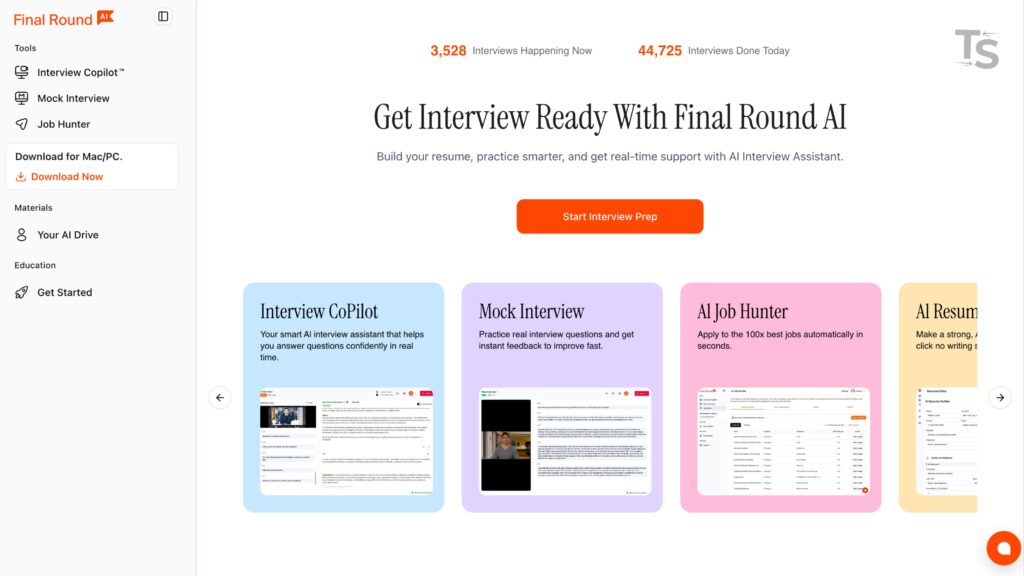
If you want interview practice that feels real, Final Round AI is a strong place to start. Instead of generic questions, it looks at your resume and the role you are applying for, then asks questions that actually make sense for your profile.
You are not just answering questions here.
You are thinking on the spot, just like a real interview.
After each session, the tool shows where your answers were clear and where they felt weak. This helps you understand how interviewers may see your responses, not just whether the answer was right or wrong.
Best for: Candidates who want realistic mock interviews and role-based practice.
LockedIn AI
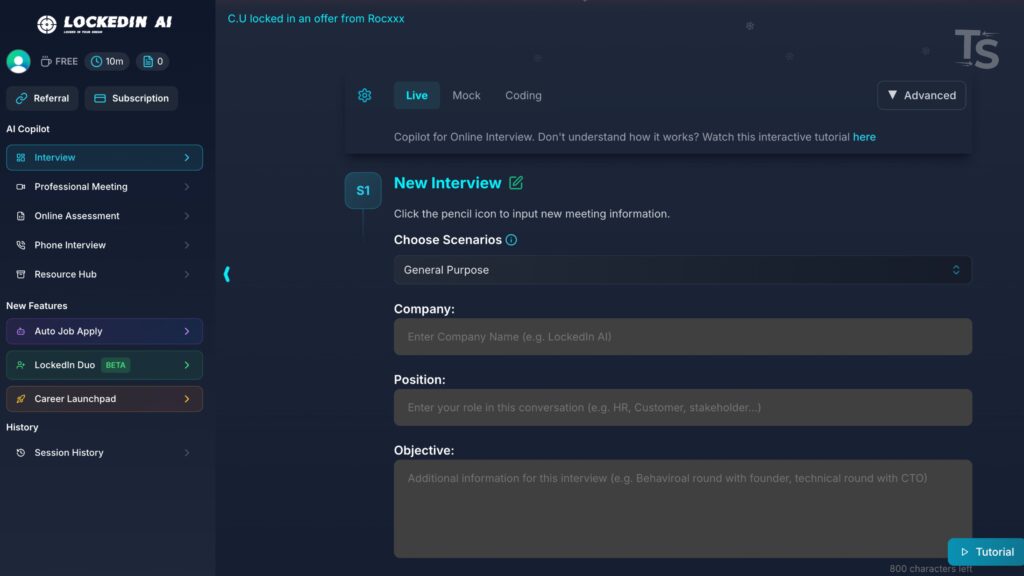
LockedIn AI is useful when interviews feel complex or unpredictable. It is not meant for basic practice. Instead, it helps when questions go deeper and require structured thinking.
You may face behavioural questions.
You may face case-based scenarios.
Sometimes, follow-up questions test your reasoning.
LockedIn AI prepares you for these situations. It adapts questions based on how you answer, which helps you practise thinking clearly under pressure.
Best for: Professionals and experienced candidates preparing for advanced interviews.
InterviewBuddy
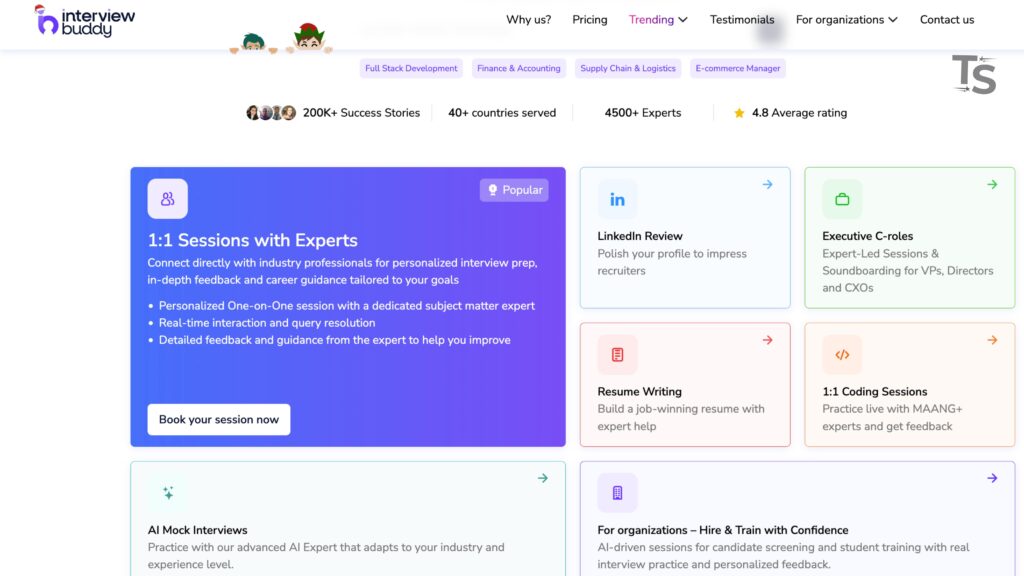
InterviewBuddy is helpful if you feel confident on paper but nervous when speaking. It gives you the experience of a live mock interview, which feels closer to a real interview environment.
During practice, answers are spoken out loud, just like a real interview.
Thoughts are explained clearly, which helps improve communication flow.
At the same time, interview pressure is experienced in a safe and controlled space.
After the session, you receive feedback on confidence, clarity, and communication. This helps you understand not just what you said, but how you said it.
Best for: Students and freshers who want real interview-like practice and confidence building.
Interview Sidekick
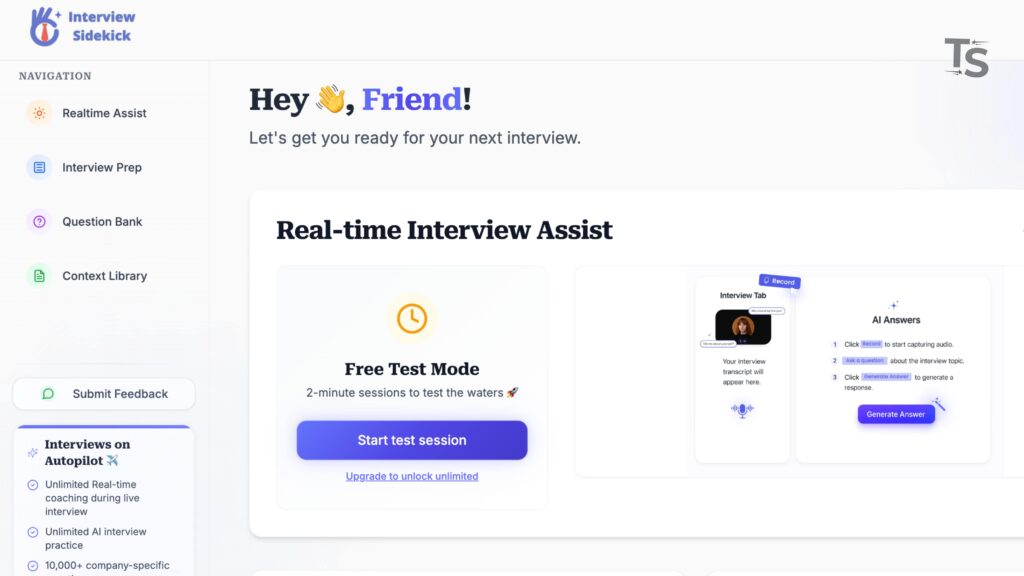
Interview Sidekick is for people who know the answer but struggle to explain it properly. If your thoughts feel scattered during interviews, this tool helps you organise them.
It focuses on structure.
It guides how to start, explain, and conclude answers.
This is especially useful for behavioural and situational questions.
Instead of giving ready answers, Interview Sidekick helps you think in a clearer flow. Over time, this improves how naturally you explain things in interviews.
Best for: Candidates who want better answer structure and clearer communication.
Remasto
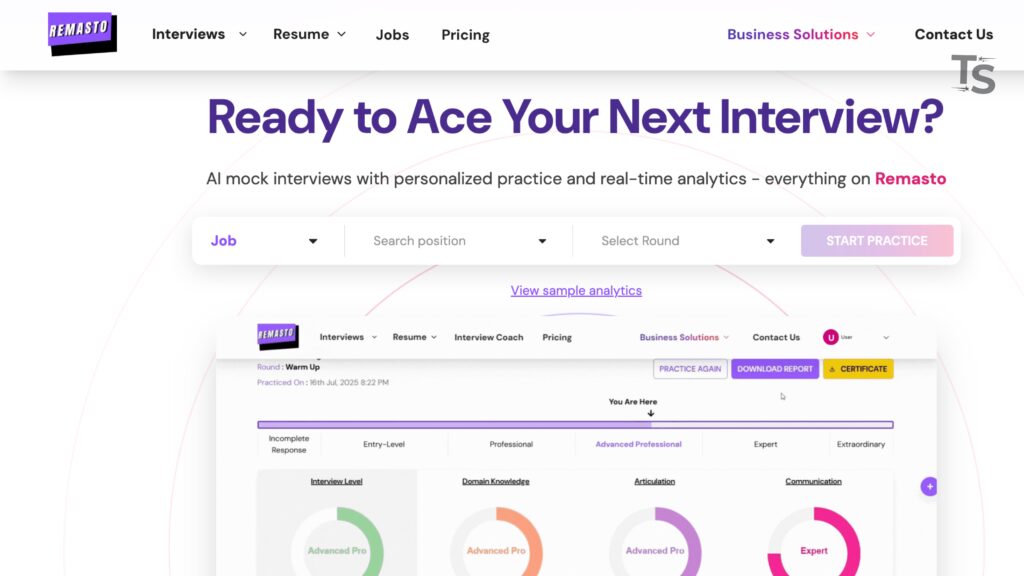
Remasto is designed for technical interviews, where problem-solving matters more than memorised answers. It focuses on coding, system design, and technical thinking.
Problems are practised step by step, which helps you understand the logic clearly.
Mistakes are reviewed carefully so you know where things went wrong.
Over time, this improves both problem-solving logic and overall approach.
This makes Remasto useful if you are preparing for developer roles or technical rounds where thinking matters more than speed.
Best for: Developers and technical role candidates preparing for coding or system design interviews.
Final Tip for Readers
You do not need to use all five tools at once. Start with mock interviews.
Improve how you explain answers. Then focus on role-specific or technical practice.
Using AI for interview preparation works best when tools support your learning, not replace your thinking.
How to Practise Interviews Using AI (Step-by-Step)
Using AI for interview preparation works best when you follow a simple process. Random practice often leads to confusion, so a step-by-step approach helps you improve faster.
Start by understanding the interview type.
Is it HR, technical, behavioural, or a mix of all three?
This helps you choose the right AI tool and avoid wasting time.
Next, practise basic interview questions first.
Begin with common questions like introductions, strengths, and experience.
This builds confidence before moving to complex rounds.
Once basics feel comfortable, move to mock interviews. Answer questions in one sitting. Treat it like a real interview without interruptions.
After each session, review feedback carefully. Look at unclear answers. Notice repeated mistakes. Focus on improving one area at a time.
Work on communication, not just answers. Pay attention to structure, clarity, and confidence. Good answers matter only when explained well.
Finally, repeat practice regularly. Short daily sessions work better than long, irregular ones. Consistency makes interviews feel familiar, not frightening.
AI helps when you practise honestly and reflect on feedback.
It supports improvement, but effort still comes from you.
Benefits of Using AI for Interview Preparation
One of the biggest benefits of AI interview preparation is flexibility. You do not need to wait for mentors, friends, or scheduled sessions. Practice can happen anytime, based on your availability.
AI tools offer personalised practice. Questions adapt to your role and experience.
This makes preparation more relevant than generic guides.
Another advantage is instant feedback. You immediately see where answers feel weak.
This helps correct mistakes early instead of repeating them.
Confidence improves with regular practice. Mock interviews reduce fear of real interviews. Familiarity lowers nervousness.
AI also saves time. You focus only on important questions.
Unnecessary topics are avoided.
Most importantly, AI creates a safe practice space.
You can make mistakes without judgment.
Learning feels less stressful and more controlled.
Limitations and Risks of AI Interview Tools
AI tools are helpful, but they are not perfect. Relying on them without understanding their limits can create problems during real interviews.
One limitation is overdependence. Using AI too much can reduce original thinking.
Interviews still require personal judgement and human interaction.
AI feedback is not always context-aware.
Some answers may sound correct but feel unnatural to interviewers.
Human expectations can differ from AI suggestions.
Another risk is memorised responses.
Repeating AI-style answers can make replies sound robotic.
Interviewers often notice this quickly.
Technical interviews also have limits. AI cannot fully replace real problem-solving discussions. Whiteboard thinking and follow-up questions still matter.
Privacy is another concern. Uploading resumes and answers means sharing personal data. Always use trusted platforms and read policies carefully.
AI works best as a practice tool, not a replacement.
Balance AI practice with self-thinking and real conversations.
Who Should Use AI for Interview Preparation
AI interview tools are useful for many people, but they are not meant for everyone in the same way. Understanding who benefits most helps you use these tools better.
Students and freshers benefit a lot from AI practice. They may lack interview experience. AI helps them practise without pressure.
Job switchers also find value in AI tools. Different roles require different interview styles. AI helps adjust preparation quickly.
Working professionals preparing for promotions can use AI.
It helps refine communication and confidence. Practice becomes more structured.
Introverts and nervous candidates often feel safer with AI.
There is no judgement. Mistakes become learning points.
However, AI may not suit everyone. If you already get regular mock interviews with mentors, AI is optional. Real conversations still matter.
AI works best as a support tool. Use it to practise, reflect, and improve. Do not let it replace human thinking.
Final Thoughts
Interview preparation does not have to feel overwhelming. In 2026, AI for interview preparation gives students and job seekers a smarter way to practise without pressure. It helps you prepare consistently, understand your weak areas, and build confidence step by step.
However, AI is not a shortcut to success. It cannot replace your thinking, experience, or personality. What it can do is support your effort and make practice more focused and effective.
The best results come from balance. Use AI to practise questions.
Reflect on feedback. Combine it with self-thinking and real conversations.
If you treat AI as a practice partner rather than a replacement, it can make interviews feel less stressful and more familiar. With the right approach, AI becomes a helpful guide, not a crutch.
Frequently Asked Questions (FAQs)
Yes. AI helps you practise questions, improve answers, and build confidence when used properly.
No. AI helps with practice, but real interviews still need human interaction.
Yes. Freshers benefit a lot because AI provides practice without pressure or judgement.
Mostly yes, but avoid sharing sensitive details and always check privacy policies.
No. Free tools or trials are enough for basic interview practice.
Daily short practice of 15 to 20 minutes works best.